 Raymond Flotat July 22nd, 2025 - 9:00 AM
Serious comic book fans know the history of the medium colloquially and professionally referring to the various eras by the names tied to its timeframe: Golden Age, Silver Age, Copper Age e.g. The Silver Age (roughly 1956 through 1970) is celebrated for being the timeframe where many of the modern era’s most famous characters were created. The X-Men, Spider-Man, Daredevil, The Incredible Hulk and too many more to name were born out of the Marvel Comics bullpen in the ’60s, but none made a greater mark than the Stan Lee/Jack Kirby creation, the titular Fantastic Four. A group of scientific explorers, all family or family friends, mutated through exposure to cosmic radiation, each boasted a unique power and position in the group. Mister Fantastic Reed Richards could stretch his appendages elastically, Sue Storm his love interest and eventual wife could become invisible and create forcefields, Johnny Storm her brother could light himself ablaze and fly, and Ben Grimm (nicknamed The Thing) was a solid ton of rocky muscle. This group became the pace car for The Silver Age of superheroes and the early template for much of Marvel Comics’ success to follow. The characters live in legendary status, the first 100 issues spawning some of comics’ most memorable storylines and villains. The Inhumans, The Kree, Black Panther and many more characters began as stories within this title.

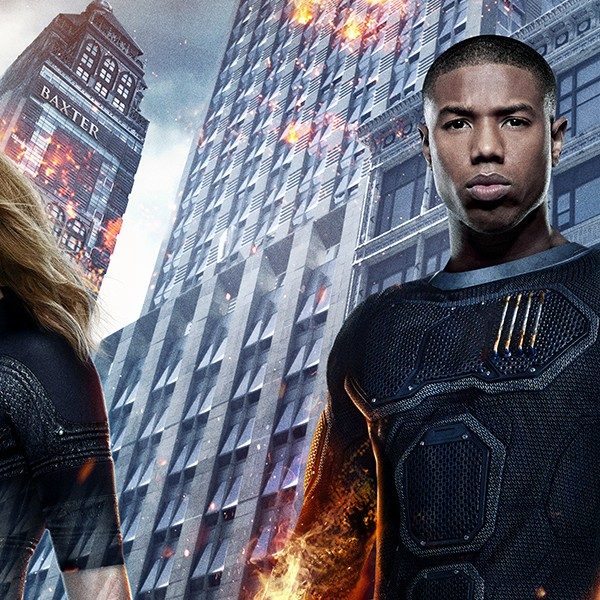
Technically—if you count the unreleased 1994 Roger Corman adaptation—this is the fourth rendition of the fearsome foursome for the silver screen. The early 2000’s rendition was led by Ioan Gruffudd, Jessica Alba, Michael Chiklis and Chris Evans (yes, pre-Captain America Chris Evans) and did a serviceable job bringing the characters to life, if not one of diminishing returns. Ten years later 20th Century Fox attempted a reboot directed by Josh Trank starring then rising stars Miles Teller, Michael B. Jordan, Kata Mara and Jamie Bell. That adaptation fell far short of the mark, and was widely derided for numerous reasons, not the least of which being reshoots that introduced a number of continuity errors within the film. In 2019, Disney purchased most of 21st Century Fox’s assets (minus some business units such as Fox News, Fox Business and Fox Sports) and thus, the characters long optioned by the studio, including the X-Men, Deadpool, and the Fantastic Four, would return to the careful, successful, watchful eye of Marvel Studios and its impresario, studio President Kevin Feige. Fans salivated at the news, and following many years yearning for a film presentation of the Fantastic Four that lived up to the reputation of the legendary comic, Marvel Studios is about to release The Fantastic Four: First Steps. Will it live up to the impossible expectations and hype that six decades of storytelling and fandom have built up?

First Steps begins what is being called Phase 6 of the Marvel Cinematic Universe, the third segment of the dimension juggling post-The Infinity Saga sequence called The Multiverse Saga. This comes on the heels of the much-loved films Thunderbolts* and Deadpool & Wolverine. This film is directed by Matt Shakman who helmed the wonderful WandaVision series for Disney+. Shakman brings the characters to a different fragment of the MCU, known as Earth-828 and set entirely in that version of Earth’s 1960s. You have the beautiful, Jetsons-esque/quasi-futuristic curved designs and vibrant color schemes, nestled in with technological advancements that did not exist in the real planet Earth in that decade. At least this point in the continuity, the Fantastic Four are the sole superheroes on the planet, and are both depended on by and famous with the world’s public. You’re dropped in right away with a brief montage that explains their origins but setting you wisely at the start of a significant moment in their lives. Shakman chooses here to eschew starting everything again from scratch, and it’s probably for the best. Most fans of this franchise and story are well aware of how the FF come to be and asking them to wait for a second film before getting to something new might have been one time too many in twenty years.

Instead, you see the group at the apex of their success, and also at the most fragile place in their lives, trying to keep their own family safe at the same time as a vulnerable planet population with no other world protector on their level. Reed Richards is portrayed this time by Pedro Pascal, fresh off his runaway success as Din Djarin in The Mandalorian and Joel in HBO’s adaptation of the masterpiece video game The Last of Us, brings the longing heart of this team to bear wonderfully. Basically, forever lost trying to think his way through problems of immense stature, and for all his intellect, often trapped unable to render an easy solution that will benefit all parties. Vanessa Kirby (The Crown, the Mission Impossible series) has the unenviable task of bringing Sue Storm to life, and does so gracefully, embodying the warm heart of the team keeping them all together, but with a tiger-like ferocity as a protector. Ben Grimm was long portrayed with a loving, somewhat cartoonish nod to a Brooklyn, New York City accent. Ebon Moss-Bachrach, two-time Emmy winner for the genius FX show The Bear, takes a more nuanced approach to the character, brewing in a gentle giant tenderness compared to the nonstop beat-’em-up action the character was long known for. And last but not least, Stranger Things breakout star Joseph Quinn cements the group as Johnny Storm, The Human Torch. While still cocky and fearlessly confident, this take on the character is far less of the over-the-top womanizing and arrogance previous renditions of the character were known for. Here, the attributes Torch is usually associated with show up only in other character’s opinions of Johnny. He sees himself in far more aspirational and pure terms than everyone else seems to.

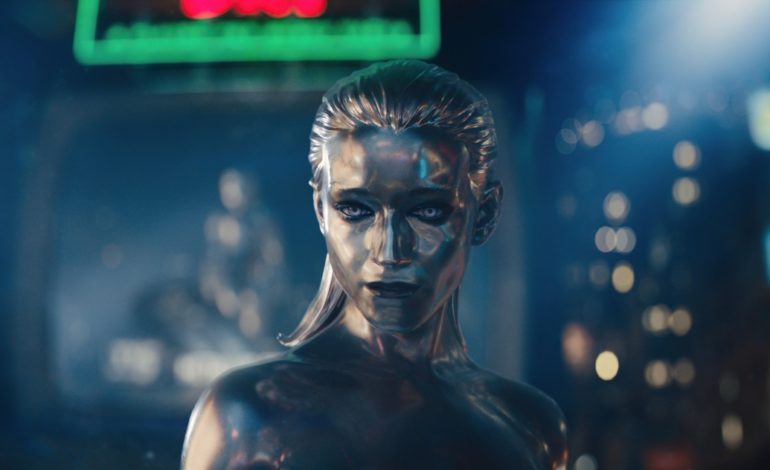
Diehard marks for the original comics will be elated for the opening sequence, as it features numerous references to the vintage Fantastic Four comics as well as several early era villains both large and small. If you liked the style and color palette of The Incredibles, you’ll now know exactly what vivid era of comics inspired it. The previews and trailers for the film make no bones about it, this film features the first true depiction of the world-shaking threat of Galactus, The Devourer of Worlds and his herald, the Silver Surfer. Galactus means to consume the Earth, and our fabulous foursome family come face to face-to-face with Silver Surfer at the heart of Times Square. Silver Surfer wastes no time, Earth and everyone on it are doomed at the incoming threat of Galactus. The story centers largely on the team’s efforts to thwart this unstoppable foe, though not fully through strength of arms. This is more of an Apollo 13 / The Martian-exercise in team-think problem solving than it is an all-out slugfest. That’s much of the delight of the film, watching them trying to figure out how to get it done. Ralph Ineson (Game of Thrones, The Witch) is the voice and motion capture performance for the monolithic Galactus (observant MCU fans will remember him as having had a small role in Guardians of the Galaxy Vol. 1 as a member of Yondu’s ravager crew). Julia Garner (most fans will know her from her star-making turns in Netflix’s Ozark and the famed miniseries Inventing Anna) is emblematic of the strategy in assembling The Fantastic Four: First Steps. Each of the major players in this movie are more than mere character actors, they are bona fide professionals, working hard to bring the true spirit of these characters to life. The production design of this film is astounding, but it’s evident in seeing the minimalism in Garner’s performance, Shakman and Marvel Studios anchored this new iteration of Marvel’s first team on the four performers with the grandest skill on the modern stage.

There are connections to the greater continuity of the Marvel Cinematic Universe, but the film strongly stands on its own. The only shame in this depiction is that the best of the chemistry between Pascal, Kirby, Moss-Bachrach and Quinn crescendos right near the end, you get to see how good of a job they do bringing the notion they are a real family to life at the tail end. This is also a somewhat utopian telling of an Earth history, largely avoiding the presence of many real-world calamities in a time united by peace and prosperity (and serving as stark contrast to the fractious, politically fraught times of our world circa 2025). But it is wild enough to see a world so removed from despair, corruption, racism, poverty and bigotry, that its denizens can actually work together with relative ease to attempt to tackle an Avengers-level threat, without the actual Avengers.

5 out of 5
It stands hard to fathom that the Marvel Cinematic Universe is now a whopping thirty-seven films into existence, but The Fantastic Four: First Steps is a fresh and rock-solid addition to the ever-expanding mythology. Anchored by stellar performances from the film’s lead cast, Matt Shakman takes a script by Josh Friedman, Eric Pearson, Jeff Kaplan & Ian Springer and delivers a world somehow impossibly both achingly familiar and almost fantasy-sci-fi-level different from the world we know. All elements considered; this is a big movie that does cinematic justice to one of comics’ most essential team of characters.