
 Dempson Juvenal May 2nd, 2025 - 6:20 PM
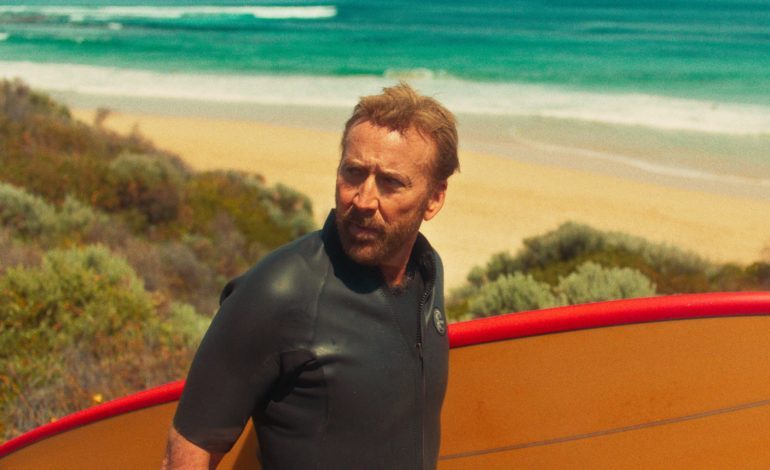
For an actor as prolific and controversial as he is, Nicolas Cage’s recent track record has seemingly improved in the last five years. For a flurry of reasons, he had been stuck making 10 direct-to-DVD dollar store bin movies a year, all called something like “Blood Stampede”. Then in 2022, he starred in Pig, which was such a critical success that many couldn’t believe that he was snubbed for an Academy Award nomination. His performances in films like Renfield and Longlegs were the largest selling point of their marketing. The idea of Nic Cage going crazy in a movie is not a novel concept, yet he still manages to keep his fan base satiated. Enter The Surfer: an Irish-Australian co-production in which all of your wildest Cage desires are on full display and with a little bit of meat to chew on as well.
The Surfer, directed by Lorcan Finnegan, opens with a man (Cage) who just wants to take his son surfing so he can show him his childhood home on the Australian coast that he plans on buying. As they get to the beach, they’re met by some angry beach dwellers who repeat, “Locals only. Don’t live here, don’t surf here”. Cage’s character (credited as The Surfer) is American, but was born and raised there. At this point, the viewer might feel like the film is making some commentary on gentrification and land ownership, but that idea is quickly discarded as we’re introduced to the film’s main antagonist, Scally (Julian McMahon). Scally is the guru for a group of toxic masculine surfers who fit perfectly in the manosphere podcast ring. What follows this interaction is what makes up the main conflict of the film: Cage wants to buy the house, and he wants to surf.

The Surfer is a cautionary parable about confusing childhood trauma for nostalgia. This film takes place solely on this beach, but mostly in the parking lot where, for the entire runtime of the film, the Surfer goes through a barrage of Twilight Zone-esque scenarios that physically and mentally deteriorate him. His surfboard gets stolen by the surf bros. His phone runs out of battery and has no way to charge it. He swaps items with an unhoused man living in his car, which is clearly meant to be a mirror character for the Surfer. The sun-kissed atmosphere of Luna Bay gradually turns into a dehydrated nightmare. He’s haunted by these foreboding flashes of his childhood and his father on the beach. But for the Surfer, the thought of leaving the parking lot in defeat is out of the question. Buying his childhood home in order to “give him more time” is the endgame.
It’s marvelous watching Nicolas Cage’s character go from sympathetic sad sack father to absolute lunatic. It’s a testament to his performance that, though all the audience wants is for him to go home, you fully believe that the Surfer has something to gain from standing his ground. There is a copious amount of freak-outs and insane line readings. Cage fans will rejoice to hear him shout lines like “Eat the rat!” as he stuffs a dead rat into a surf bro’s mouth. This not only feels like a role Cage was born to play; it feels like it only exists because of Cage as he descends deeper into madness, random passersby on the beach laugh and point at him. Even the kookaburras’ infamous cackles feel like they’re directed at him. And through all of the trials and tribulations, The Surfer is still convinced that he’s in the right. It’s the polar opposite of 2023’s Beau is Afraid, another film about one guy trying to exist in an imagined world that wants him dead, but The Surfer presents a more likable protagonist. That choice ultimately saves the film from being a total slog to get through.

Pacing-wise, the film feels a bit repetitive at points. The onslaught of torture that the Surfer goes through feels less heightened once you realize that he’s an unreliable narrator. He can’t pay for a coffee because his phone died, so he uses his watch as collateral till the employee can charge his phone. As you can assume, he loses both. Your mileage may vary for moments like that. Luckily, the third act is a pretty big departure as we start to welcome in hallucinations, angry mobs, and a cult of bros chanting “Surfer. Suffer. Surfer. Suffer.” This all works thanks to Finnegan’s inventive camerawork. During a scene where the Surfer is incapacitated, there’s a water droplet effect in front of everyone’s faces that adds to the nightmarish quality of the film, but also a mirage-like respite from the dry, sunbeaten environment we’ve been living in for most of the film.
3 ½ stars out of 5
This is an easy recommendation for any fan of Nicolas Cage as an actor. It’s an existential descent into madness with some wonderfully scorched beach cinematography. For anyone looking for a straightforward thriller, you might grow tired of its antics.
