 Amani Sanders June 15th, 2025 - 2:01 PM
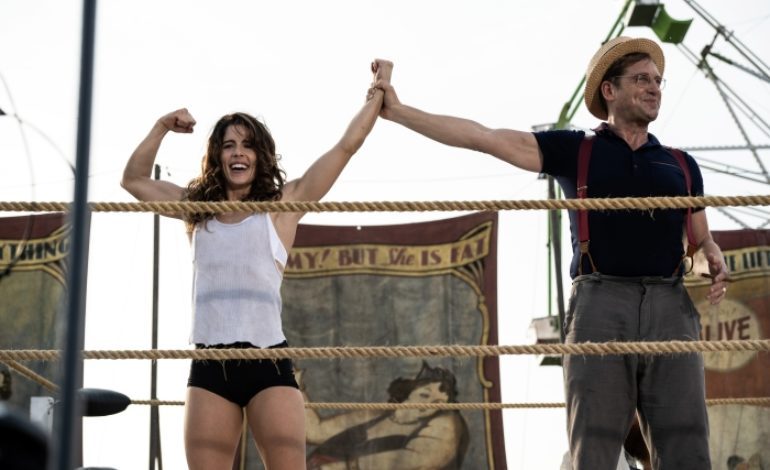
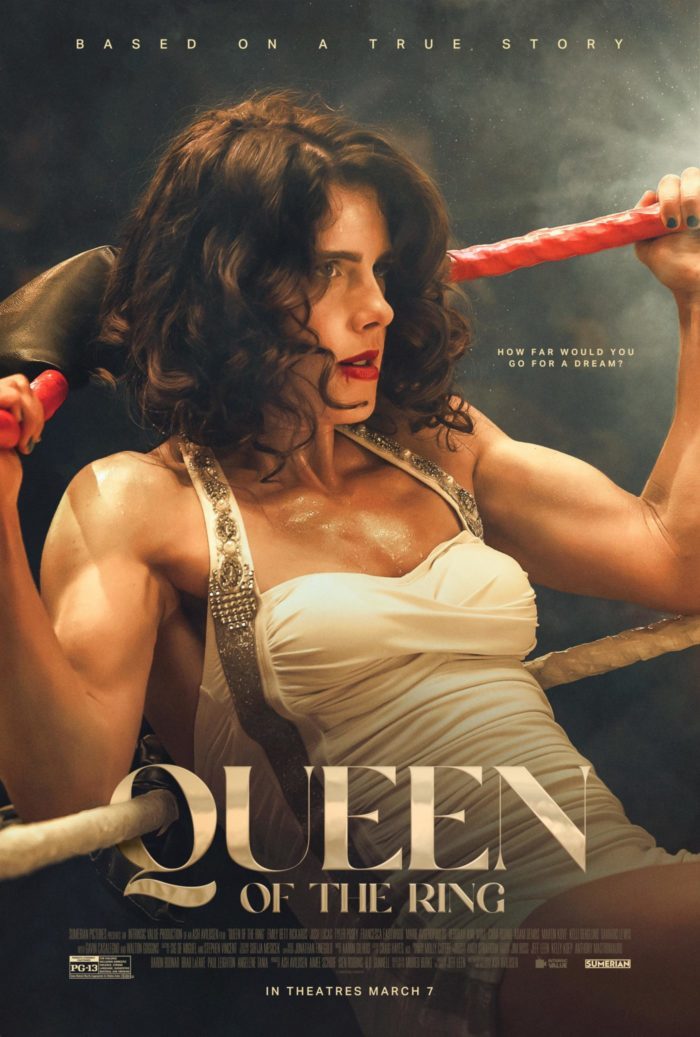
Queen of the Ring is the latest addition to the growing trend in wrestling movies, following films like The Iron Claw and Unstoppable. But if you are a wrestling fan, you may not have heard of Mildred ‘Millie’ Burke. She became the first million-dollar female athlete in history by dominating a traditionally masculine sport and inspiring other women to dominate the field with her. The biopic follows Millie (Emily Bett Rickards) as a single mother looking for her passion. After watching Billy Wolfe (Josh Lucas) in a match, she convinces him and his son, G. Bill (Tyler Posey), to become part of her team to train her to wrestle professionally. With the help of Billy Wolfe, Millie kicks the door open for women to compete in professional wrestling.
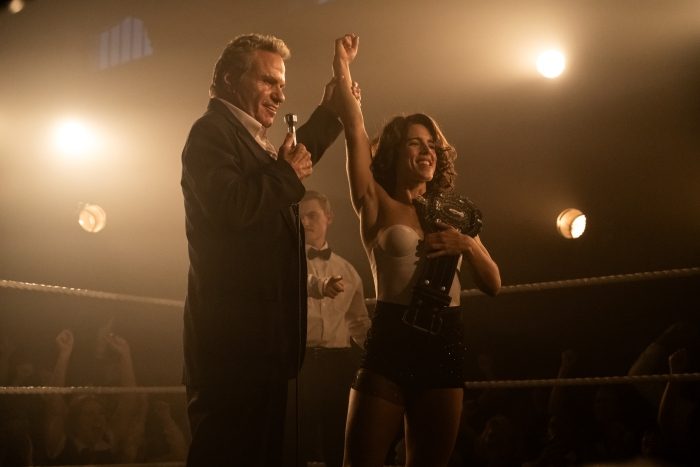
This film hooks you in from the opening scene and does not let you go until the end. It begins with one of the biggest matches of Millie’s career, against ‘The Texas Tornado’ June Byers. Coached by her son, Joe. Jr (Gavin Casalegno), she is clearly fighting through something internal in this match. You’re then taken back to the start of Millie’s career. Her enthusiasm from the first scene makes you invested in her and her career. Through her narration, Millie talks about the laws against women in pro wrestling at the time, so she was confined to slinging hashbrowns at her mother’s (Cara Buono) diner. But after watching Billy Wolfe, she tells her mother, “This is my destiny.” From the line delivery alone, you can gather the conviction and assuredness that Millie carried with her throughout her career and her life.
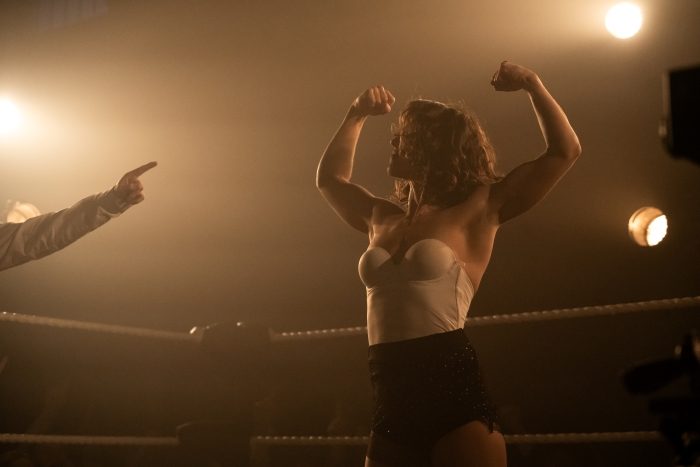
Rickards captured Millie Burke’s passion for the sport so much so that you can feel it through the screen at all times. Even when dealing with her personal issues, wrestling was always at the forefront of her mind. Her priorities were always about creating a better life for Joe Jr. and getting women together to do something they love to do. Rickards’ performance as Millie felt personal, as if I could have called her my friend. It feels normal to call her Millie rather than Mildred. She encapsulates a southern belle who has real grit and determination.
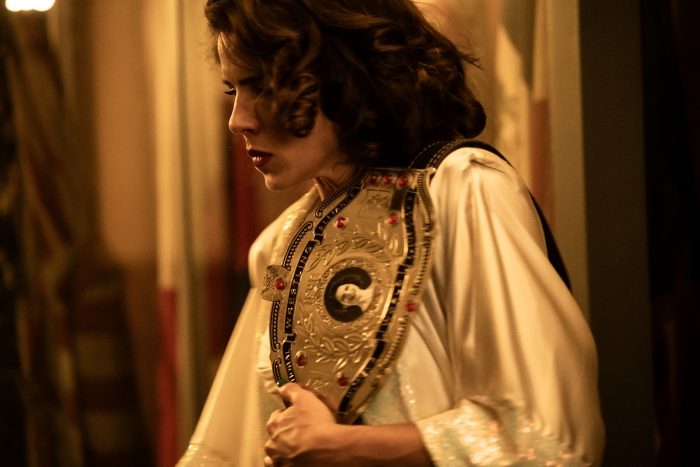
With the amount of work we see Millie put into herself and her Women’s league, Rocky is the only comparison that can be brought to mind. The emotions you go through while watching Millie compete is truly reminiscent of how it felt to watch Rocky become triumphant over his adversaries. The difference with Queen of the Ring is that it’s based on a true story, and Millie’s real life whose on screen triumphs were never for her alone. Each match that Millie competed in was a step forward for women, and more specifically, a step forward toward the goal of allowing women to make a career in professional wrestling nationwide. Each match proved that women in the professional wrestling world could be feminine and tough, instead of one or the other.
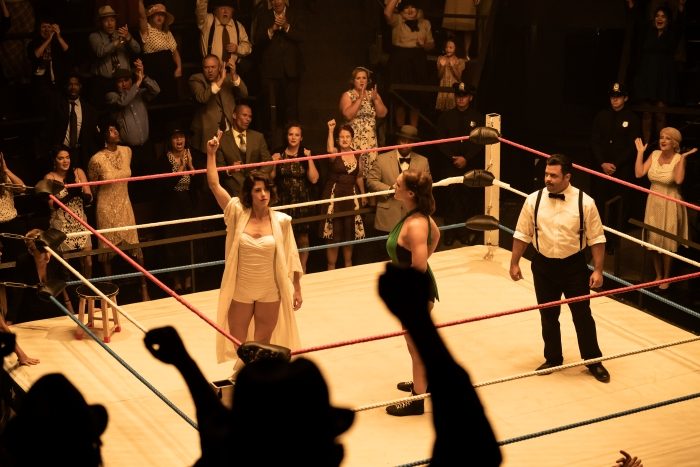
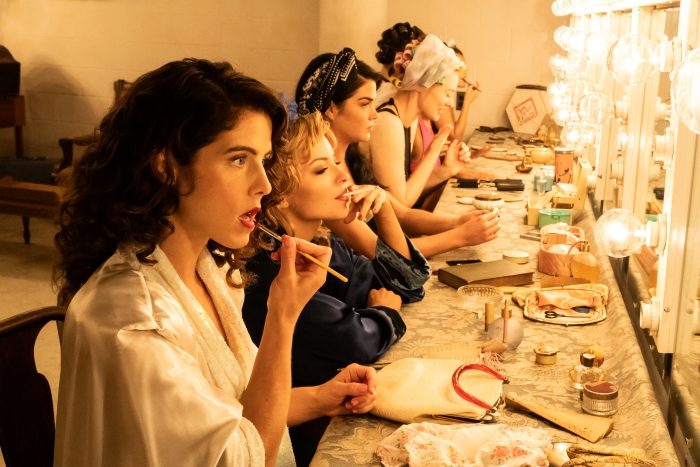
Besides Rickards exceptional portrayal of Millie, the supporting cast was just as great. Lucas makes Billy Wolfe an ‘antagonist’ with multiple layers. And the film overall does an excellent job of acknowledging that while Wolfe was a key figure in the legalization of women’s wrestling, he was abusive to Millie, and his womanizing behavior made him a hinderance just as much as it did a help. Other prominent male figures, and friends of Wolfe, such as Walton Goggins as Jack Pfefer and Martin Kove as Al Haft also contributed to the rise of women’s wrestling. However, Francesca Eastwood as Mae Young, Marie Avgeropoulo as Elvira Snodgrass, Kailey Farmer as June Byers, Deborah Ann Woll as Gladys Gillem, Kelli Berglund as Nell Stewart, and Damaris Lewis as Babs Wingo are the most key figures in the film besides Rickards as Burke. Each woman played a key role in showing the diverse group of women that were inspired by Burke, and their willingness to follow her lead made for multiple powerful moments in the film that epitomizes womanhood and sisterhood.
Score: 4 out of 5 stars
Ash Avildsen’s Queen of the Ring is a stellar biopic about the woman who redefined and reinvented the sport of wrestling. Mildred Burke’s passion for the sport and her persistence to getting women a chance at the sport is displayed throughout the entire film. She was an admirable woman. Though I was not aware of Burke’s history before this film, I think Rickards does an incredible job of displaying Millie’s passion and showcasing the permanent stars in her eyes in her portrayal. It is easy to resonate with this film emotionally, and I hope this film inspires viewers to look into the queen of the ring, Mildred ‘Millie’ Burke.