
 Mallery McKay February 15th, 2026 - 4:39 PM
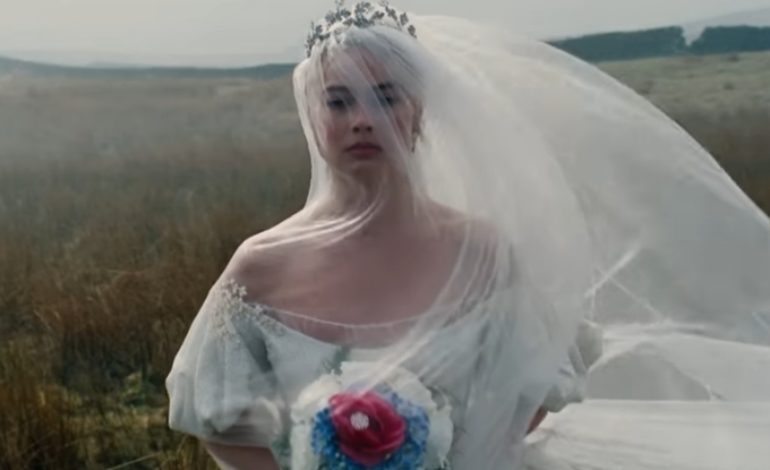
While Wuthering Heights might be taking everyone to the theaters, not everybody is leaving satisfied. Even though the adaptation of the Emily Brontë classic has already become one of the biggest hits of the year globally, audiences continue to have mixed reactions to this obsession-possession tale.
On Sunday Morning, Variety reported that Wuthering Heights is expected to debut with $82 million globally, comprising $40 million from the domestic box office and $42 million from international. But can this box-office debut truly be called a success when audiences and critics are divided over the story?
While the Emerald Fennell-directed feature holds an 80% overall on the Rotten Tomatoes audience’s Popcornmeter, the critics’ Tomatometer seems to be fluctuating in the late 50s to early 60s, currently at 62%. A few of the critics’ comments below seem to offer insight into this film’s faults and strengths.
I tried, and failed, to merge Robbie’s miscasting into the film’s delirious artificiality alongside the apple-sized strawberries, the gowns of opalescent and latexy fabrics. – Amy Nicholson, Los Angeles Times
[Fennell] tosses out ideas about women, men, sex, freedom and dominance, even while eliding the question of Heathcliff’s race, and trying to transmit the power of Brontë’s writing visually. – Manohla Dargis, New York Times
These are clever visual conceits, and Fennell’s “Wuthering Heights” is certainly something to behold. I’m less convinced, for all its frenzied emoting and rain-soaked rutting, that it’s something to feel. – Justin Chang, The New Yorker
Go bats–t or go home. Fennell chooses the former, and flawed or not, this drunk-on-pheromones take is all the better for it. – David Fear, Rolling Stone
Fennell’s overhaul flirts with insanity, and if you can let go of preconceived notions about how this story should be told, it’s arguably the writer-director’s most purely entertaining film. – David Rooney, The Hollywood Reporter
Literary purists may object, but Fennell seizes on something passionate in the material that was always there but never made explicit, amplifying what has gone largely unrequited all these years. – Peter Debruge, Variety
From these quotes, one can gather that the criticism of Fennell’s adaptation lies in her deviation from the novel, especially at the points where the changes made are essential to the story, and more specifically in the casting. For example, the whitewashing of Heathcliff, the main character and anti-hero of the story, his race, while never specified in the novel Brontё makes it clear that he is not white, even though in the film he is portrayed by Jacob Elordi, a white man.
This cuts to the core of Heathcliff’s character and prevents the audience from grasping the true separation he feels not only from his lover but from society in general. The more positive takes on the film focus more on Fennell’s cinematography and Robbie and Elordi’s powerful chemistry. These views separate the feature from the novel, allowing the film to stand on its own merit, but, it is too soon to tell whether audiences think it has one.
Wuthering Heights is now playing in theaters everywhere.
