
 Mallery McKay May 26th, 2025 - 5:09 PM
Marcel Ophuls, the Academy Award-winning documentary filmmaker, has passed away at the age of 97, confirmed by The Washington Post through a close family member. Ophuls, son of filmmaker Max Ophuls, was known for his impactful works about the Nazi regime and war crimes and credited with “revitalizing the documentary” by his unforgiving and, from time to time, disrespectful approach towards the documentary style. He directed this approach towards people with secrets to hide, able to either get them to admit their crimes or show anger towards their gutlessness.
Ophuls was born in Frankfurt, Germany, in 1927 but grew up in Paris and later L.A. after his Jewish father sought refuge during the Nazi regime’s rise. Ophuls started working as an assistant on production sets in Paris when his father, Max, returned to Europe to direct films such as 1950’s La Ronde and 1953’s The Earrings of Madame de….
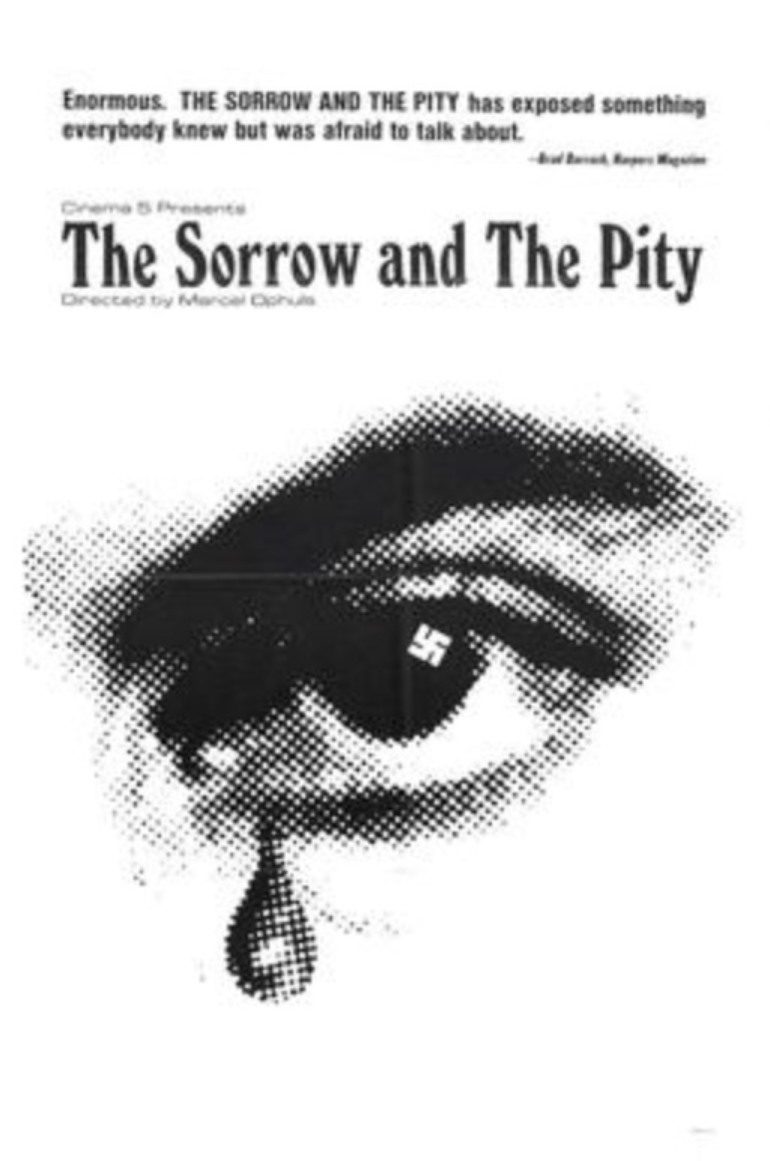
His most well-known work was The Sorrow and The Pity, released in 1969, which shows the “life in the central French city of Clermont-Ferrand during Nazi occupation.” This more than four-hour documentary was credited to be “among the first major investigations of Nazi collaboration by ordinary French citizens.” Pauline Kael wrote in the New Yorker about the doc, stating, “There’s a point of view, but judgments are left to you, and you know that Ophuls is reasonable and fair-minded and trying to do justice to a great subject.” It was originally barred from being released to the public of France due to its material but was finally aired via French Television after nearly a decade.
The Sorrow and The Pity was nominated for an Academy Award for Best Documentary Feature in 1972 but lost to Ed Spiegel and Walon Green’s The Hellstrom Chronicle. Ophuls did win an Academy Award for his 1988 feature, Hôtel Terminus, exploring “the barbarous legacy of Gestapo officer Klaus Barbie,” who was nicknamed “Butcher of Lyon” and “oversaw the roundup and deportation of French Jews in the early 1940s.”
His other notable works are 1970’s The Harvest of My Lai, which explored the My Lai Massacre committed by the U.S. soldiers in Vietnam, and 1976’s The Memory of Justice, which looked at the war crimes from the Nuremberg trials to the Vietnam War. In 1991, Ophuls centered his focus back on Germany with his feature, November Days, which focused on the time of reunification in Germany. Then in 1994, he released The Troubles We’ve Seen, which is a critical look at the “combat correspondents amid the battle for Sarajevo.”
Throughout his works, Ophuls made it clear that impartiality was not “his goal.” In fact, he told The Washington Post in 2017 that people “must always take sides,” further explaining that “neutrality only helps the oppressor. Never the victim. If you want to defend your point of view, and not in some way lie down in front of the powers that be, it takes more courage.”
Ophuls is survived by his wife, Regine Ackerman, three daughters, and three grandchildren.
