
 Jamie Barrett April 29th, 2025 - 8:38 AM
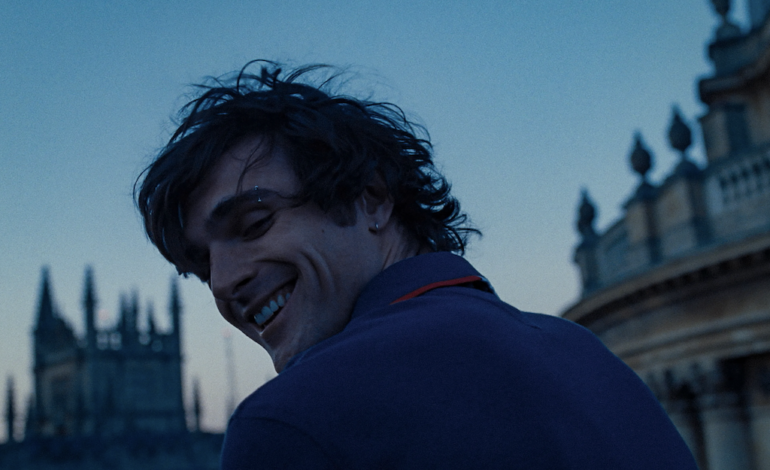
Somewhere between his first murder and third dramatic stare into the distance, I caught feelings. Not for the sweet, dependable love interest—but for him: the toxic, emotionally messed-up guy who’s clearly a walking red flag. And honestly? I’m not the only one. All over the internet, people are obsessed with the worst fictional men. From Billy Loomis in Scream to Patrick Bateman in American Psycho, and basically any character played by Jacob Elordi, the trend is clear. At the center of it is the “I can fix him” meme. It started as a joke in fandom spaces, used when someone was crushing on a clearly messed-up fictional guy. But now it’s become something bigger—part meme, part emotional coping mechanism, and something that says a lot about how we watch and relate to movies. So, let’s break it down: why do we keep crushing on cinema’s biggest red flags?
Long before TikTok edits and Tumblr fan pages, the “fixable bad boy” was already a movie staple. Think James Dean in Rebel Without a Cause—moody, misunderstood, and constantly in emotional crisis. Or Travis Bickle in Taxi Driver, who’s clearly unwell but still gets framed in a way that makes audiences lean in instead of running away. These characters aren’t just troubled—they’re made to seem romantically troubled. There’s a specific checklist most of these toxic crushes follow. They’re charismatic but cold. They have mysterious trauma. They rarely show emotions—unless it’s rage. They might be dangerous, but they also have killer cheekbones and a sad stare that says, “Please understand me.” That mix of hot and horrible is what makes them so appealing to watch. So why do we keep falling for these guys? Part of it comes from what psychologists call a reward/punishment cycle. These characters are emotionally withholding most of the time, so when they do show vulnerability or affection, it feels like a big win, even if it’s totally toxic. That high-risk emotional rollercoaster can be weirdly addicting, even in fiction. There’s also the safety of the screen. With fictional characters, we get to explore all the mess without the real-life consequences. Through parasocial relationships—where we feel connected to characters we don’t actually know—we start to believe in the fantasy. We think we could be the one to “fix” them, even though we know deep down they’re beyond saving. And the media keeps feeding us that idea. Over and over, we’re shown stories where love is powerful enough to “change” the bad guy. So it’s no wonder we keep falling for the worst ones.
Let’s be real: some of these guys are objectively awful, and yet, somehow, the internet has decided they’re boyfriend material. What follows is a mix of roast and admiration—because thirsting over red flags might not be healthy, but it is kind of fun.
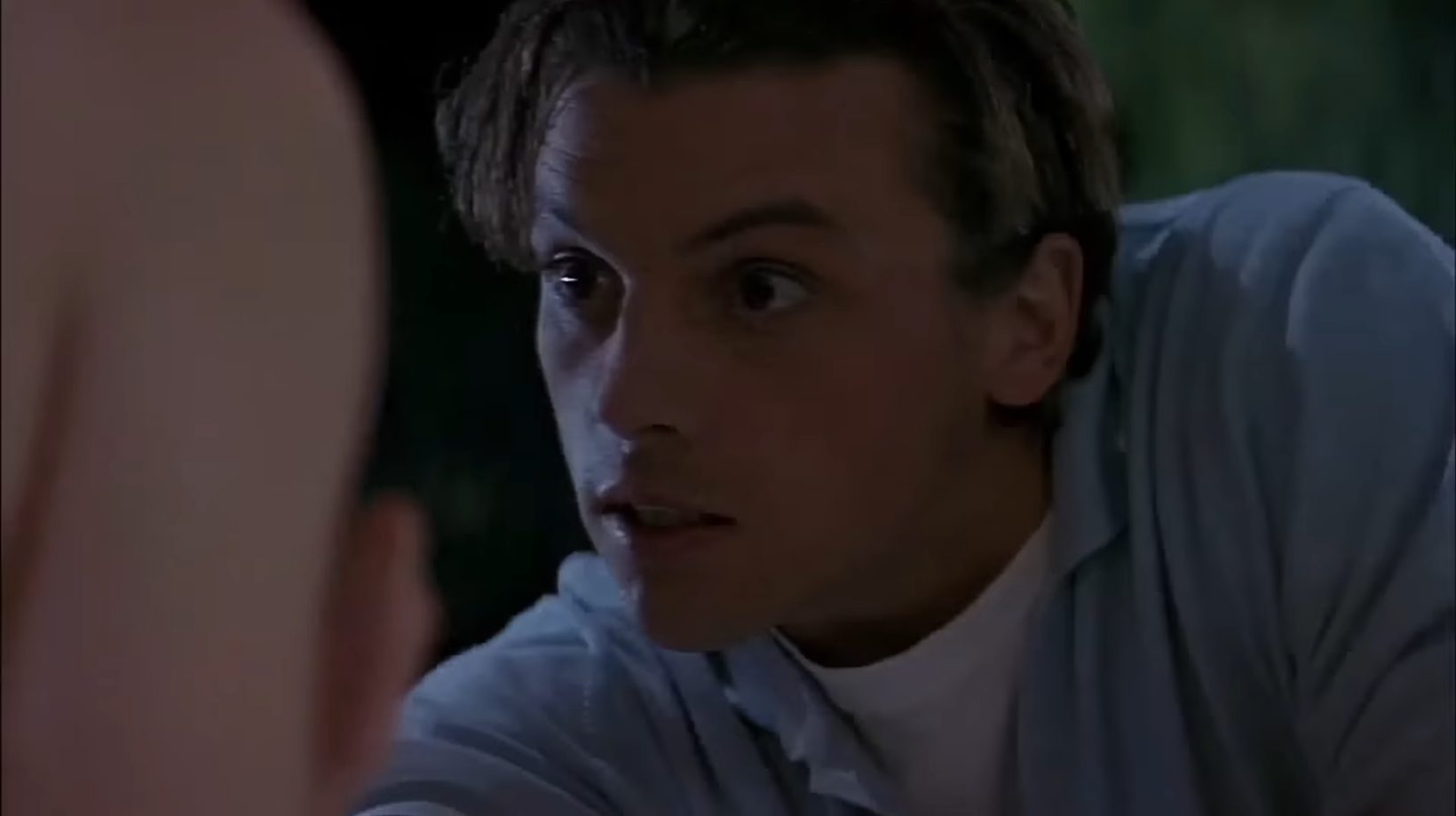
Billy Loomis (Scream)
The ultimate horror movie boyfriend—emphasis on horror. Billy starts off as the mysterious, edgy guy every ‘90s teen girl was warned about… and ends up being the killer. But instead of running, Tumblr said, “he’s just misunderstood.” Billy fits right into the “hot guy villain” trope that teen horror thrives on: he’s attractive, intense, and somehow even hotter once he’s covered in fake blood. His chaos, messy hair, and emotionally manipulative energy turned him into a Tumblr legend. He’s a walking red flag with a knife, and for some reason, we love him for it.
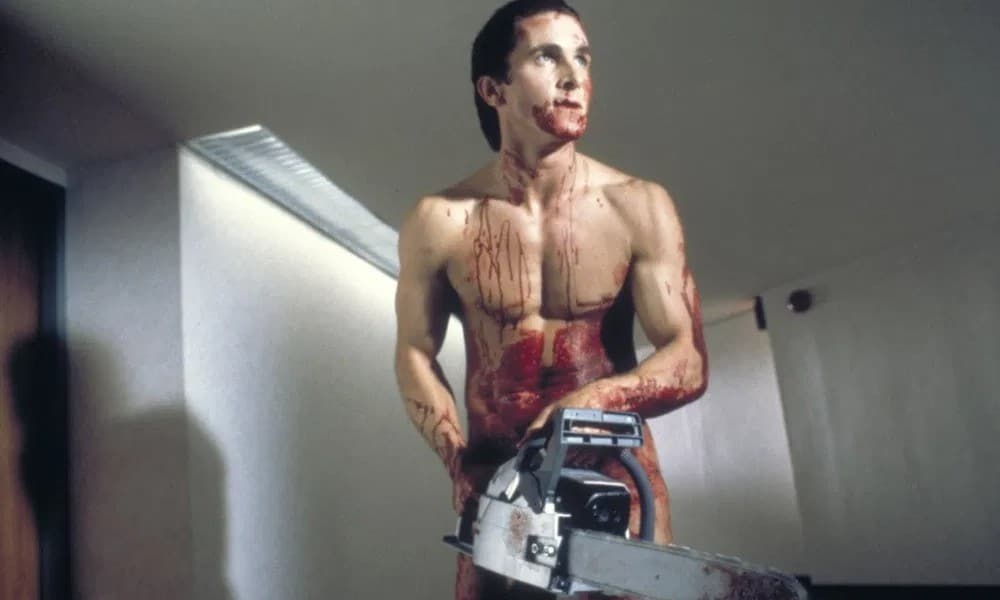
Christian Bale as Patrick Bateman in ‘American Psycho’
Patrick Bateman (American Psycho)
A literal murderer, but he does it while listening to Huey Lewis and doing his skincare routine. Patrick Bateman is what most think about when they think of toxic masculinity. What’s wild is how he went from being a critique of 1980s capitalism to a full-on internet thirst trap. People on Film Twitter pretend to love him ironically—but after a certain point, it’s hard to tell. The clean visuals, the luxury lifestyle, and Christian Bale’s intense performance have all helped turn violence into aesthetic. It’s not that we think he’s good. We just think he’s… iconic.
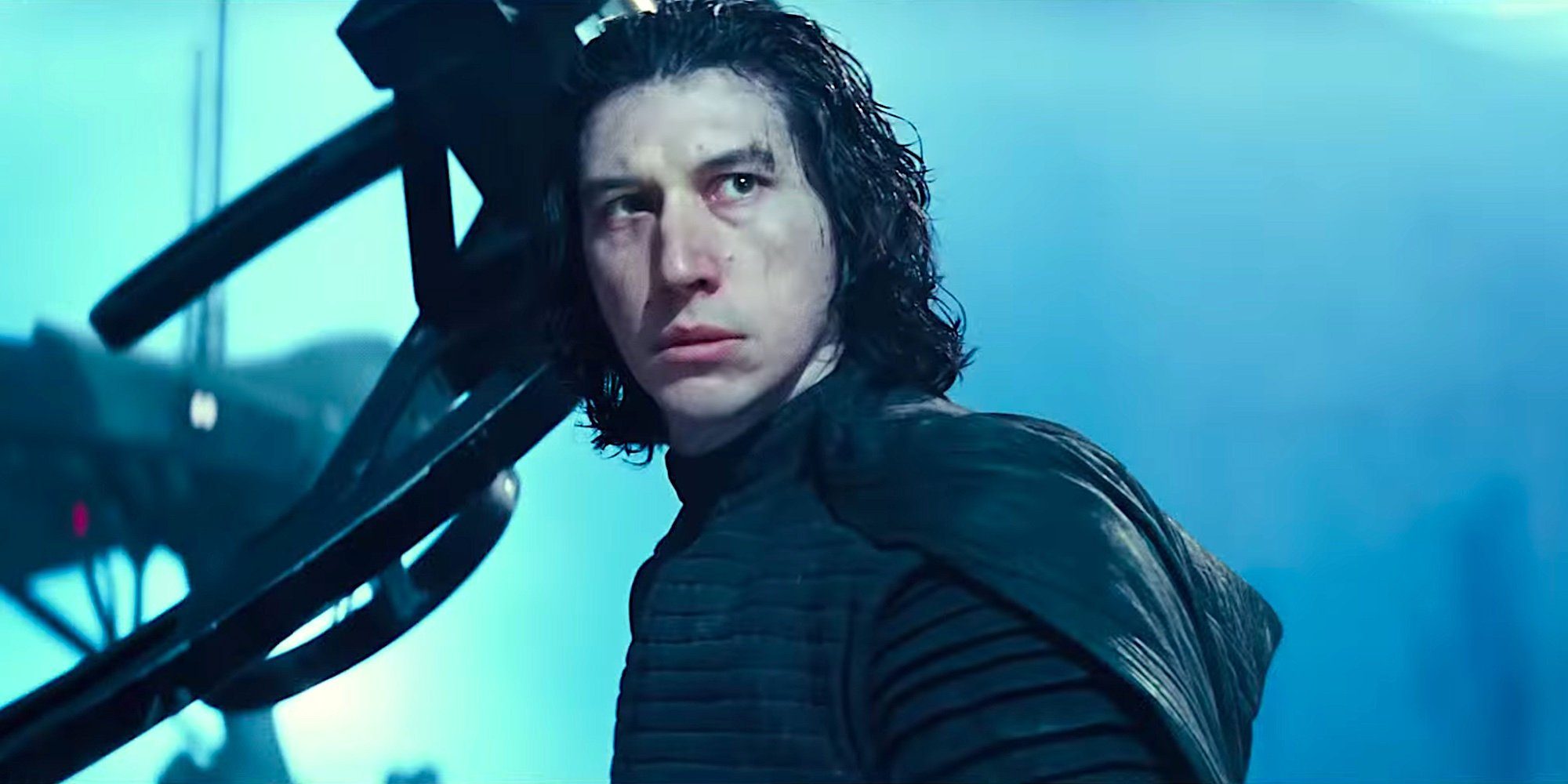
Kylo Ren (Star Wars: The Sequel Trilogy)
He’s got a lightsaber, unresolved trauma, and an extremely punchable pout. Kylo Ren is the ultimate sad space boy with anger issues. And somehow, that turned him into a fan favorite. The Reylo fandom exploded with people who wanted to see him redeemed through love. He’s basically the “I can fix him” pipeline in Star Wars form. He’s Darth Vader’s grandson, but with more emo energy and better hair. The fact that he’s a war criminal with a redemption arc just makes him more appealing in that twisted, fantasy-driven way. Star Wars has always made the Dark Side look cool—Kylo just made it hot.
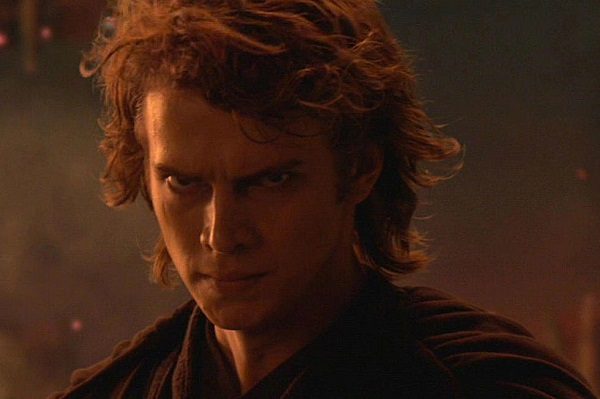
Anakin Skywalker (Star Wars: Prequel Trilogy)
Before Kylo, there was Anakin—arguably the original “I can fix him” space boyfriend. He starts off as a Jedi with a heart full of love… and ends up as Darth Vader, choking people out in a cape. He’s passionate, unstable, and deeply emotional—all things that make him dangerous and oddly romanticized. The whole Padmé-Anakin tragedy is just one big red flag with lightsaber duels. And yet, many fans still insist he just needed therapy.
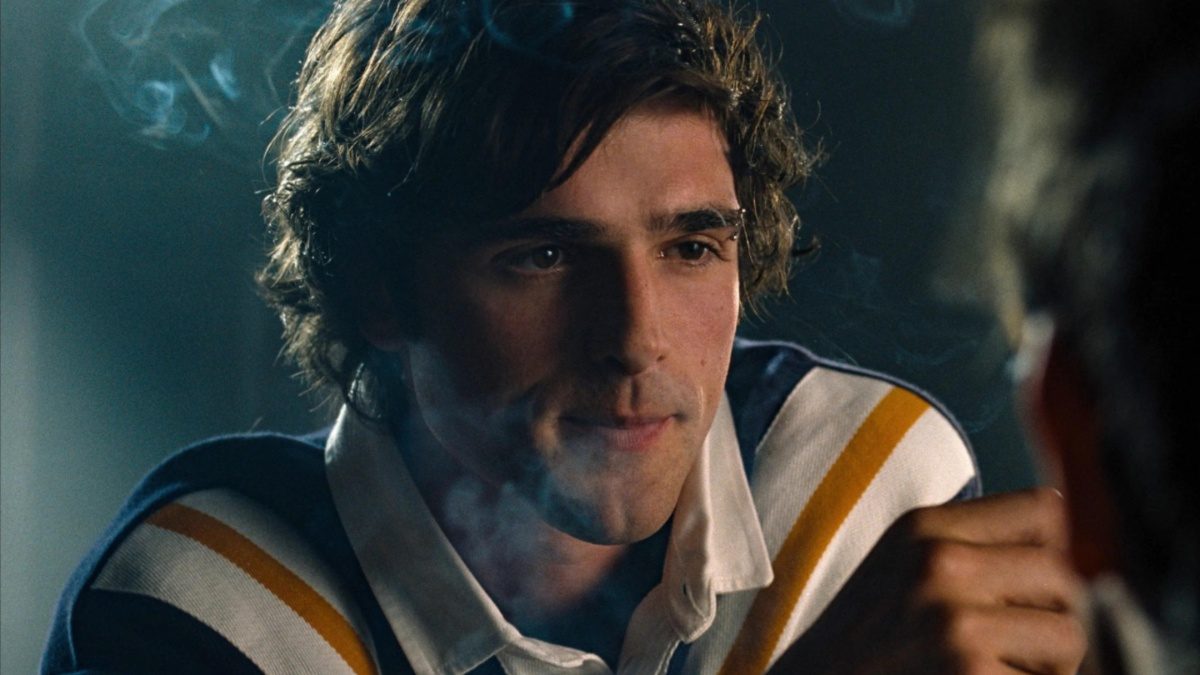
Jacob Elordi (literally anything)
Whether it’s Saltburn, Deep Water or even The Kissing Booth, Elordi plays characters who are emotionally toxic with an unsettling level of ease. He’s Gen Z’s poster boy for red-flag cinema: tall, terrifying, and somehow always irresistible. His characters range from manipulative to psychotic, but audiences keep watching, and editing, and thirsting. At this point, casting him as the “worst possible man” is basically its own genre.
The “I can fix him” obsession has exploded on platforms like Tumblr and TikTok, where thirst edits, fanfic, and memes amplify our fixation on toxic fictional men. It started as a joke, a self-aware admission of how absurd it is to fall for emotionally unavailable, often dangerous characters, but it’s become more than that. These platforms allow us to play with dangerous fantasies—like the idea of “saving” someone, without real-life consequences. Characters like Kylo Ren, Patrick Bateman, and Jacob Elordi’s various roles are romanticized through irony and meme-ification, blurring the lines between genuine attraction and performance. At the same time, it taps into a deeper emotional fantasy: the idea that love can heal even the most broken of people, a narrative tied to real-world gender roles where women are often expected to fix men. It’s a fantasy we get to explore safely through fiction, where the thrill of emotional chaos and the promise of redemption don’t come with the emotional fallout of real life. The meme might be a joke, but it reflects a cultural longing for emotional labor and the fantasy of change, even when we know deep down that these characters are not the ones to fix.
No, I can’t actually fix him. But I can psychoanalyze why I thought I could. The truth is, the enduring appeal of the “toxic crush” speaks to something deeper about human nature and our obsession with broken characters who are just too charismatic to resist. Cinema will always give us someone terrible to fall for—whether it’s the charming villain or the emotionally distant anti-hero. It’s part of the thrill: the emotional chaos, the “what ifs,” the fantasy of redemption. And maybe, just maybe, it’s a reflection of our own desires to play with danger in a world that often feels out of control. For the record, my own red-flag crush? Billy Loomis. Don’t judge me, it’s complicated. In the end, we’ll keep thirsting for these fictional men who are impossible to fix because it’s easier to be seduced by their flawed perfection than face the messiness of real relationships. Maybe that’s the real lesson: fiction lets us flirt with danger without the consequences, and we’ll keep going back for more.
