
 Mikaela Lewis October 23rd, 2025 - 3:07 PM
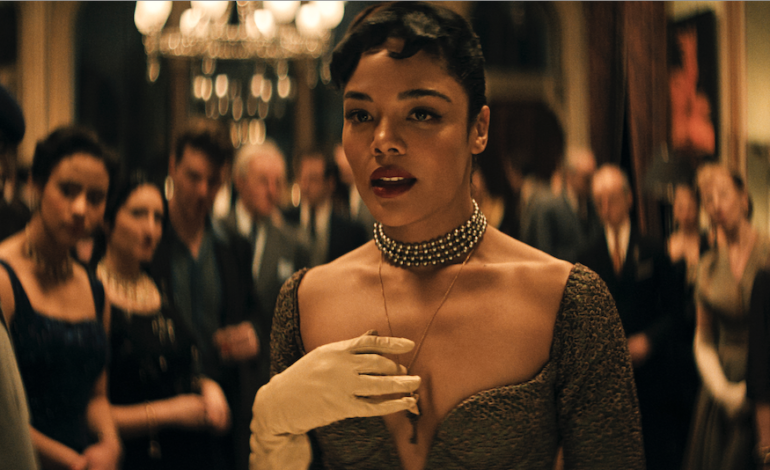
Originally written in the late 19th century, Nia DaCosta aced her 2025 adaptation of Henrik Ibsen’s Hedda Gabler. Reworking the character of Eilert to a woman—Eileen—added such profound depth to the character that it is difficult to imagine the initial gender roles on the big screen. While period pieces face the risk of failing to appeal to a modern audience, Hedda was reimagined with exciting twists and turns, making for an engaging 107 minutes from start to bitter end.
Set somewhere in Ibsen’s native Norway, the Flintham Hall Estate was a breathtaking historic site for filming, featuring all the lavish charm you would expect for a woman of Hedda’s stature—or at least the reputation she attempts to create.
Such a grand home is flaunted as Hedda floats through the rooms various, now overflowing with friends and colleagues of the couple, but the façade is cracked when rumors spread that she and her new husband, George Tesman (Tom Bateman), cannot afford it. At this time, the viewer learns that the indebted young couple are hosting this extravaganza either as a last hurrah before the bank reclaims the property or as means to covince Professor Greenwood (Finbar Lynch) to hire George for a high-paying professorship at a local university.
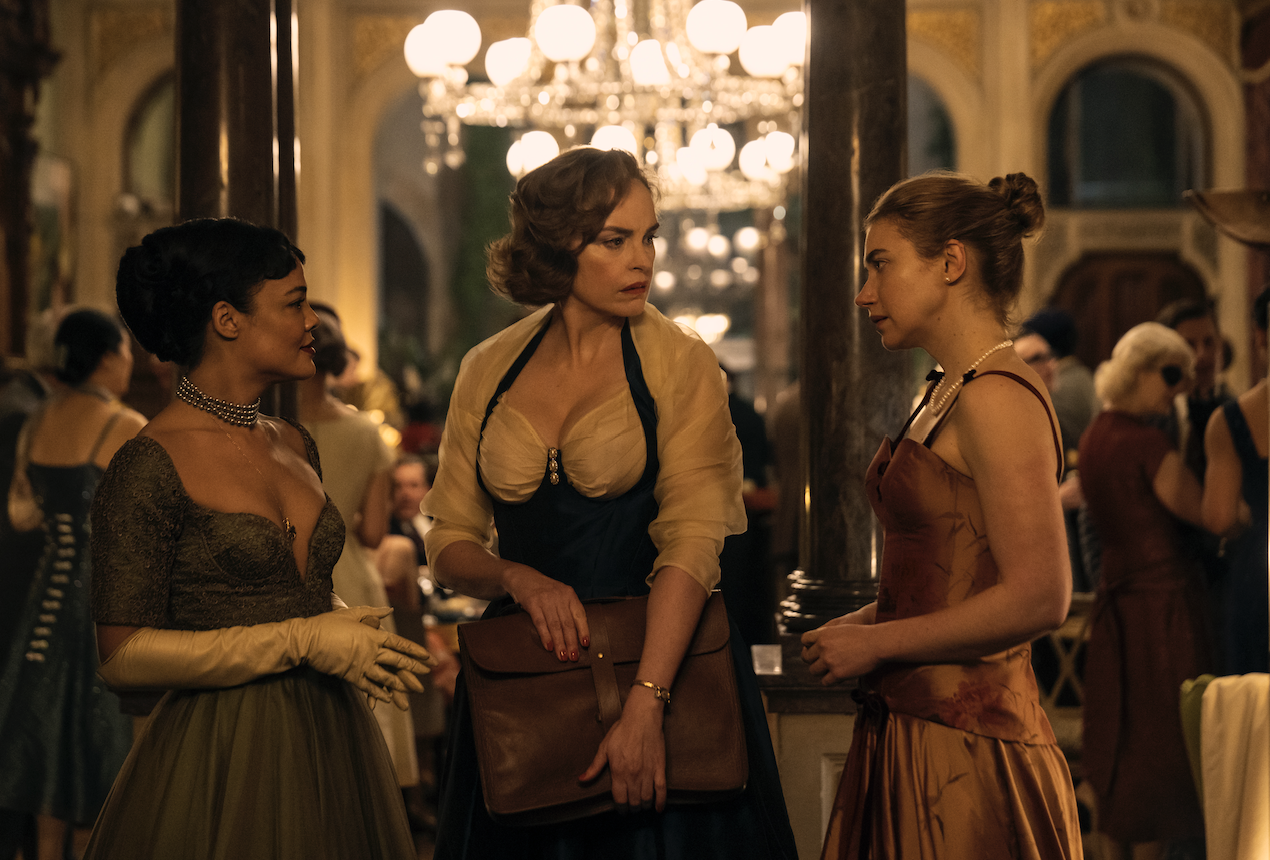
Our anti-heroine, Hedda (Tessa Thompson), is a complex leading lady, wrapped up in a lesbian love triangle in the face of conflicting interests. Descended from an aristocrat, Hedda is described as a bastard whose only remnant of her father is his gun collection. Unbeknownst to George, she is willing to go beyond impressing Professor Greenwood to secure their financial future. In competition for the role is none other than her former lover, Dr. Eileen Lovborg (Nina Hoss). Hedda is willing to take extreme measures to ensure Eileen loses not just the job, but also her life’s work and new partner.
While most scenes were shot beautifully, often contrasting the lively party with tense moments or transitioning conversing characters without cuts, continuity issues were present. For instance, George was preparing to put on a tie, but after a quick cut the audience sees him with a perfect knot. In another scene, angles switched between George dripping with sweat then completely dry several times.
Despite the modern twist, the audience was reminded constantly that it is still the 1890s, not only due to the excellently curated wardrobe, but also with the characters exploration of feminism. True stand out performances came from Dr. Lovborg and her colleague, although better known as her current lover, Thea (Imogen Poots). The dynamics of their relationship—with Eileen being the older, more experienced partner of the supposedly naïve, not to mention married, Thea—needed only a few words to be understood. A tale of toxic love and devastating betrayal shine through with the expressions and body language of not just this duo, but the whole trio of actresses leaving the viewer able to feel regret for past decisions through the screen. The devastating blow was delivered by Dr. Lovborg after losing everything: “I am just a woman.”
Amidst Eileen’s melancholy, Hedda returns to her inherited gun collection, offering a weapon to Eileen to take her life. In the early hours of morning after the party, a gun shot rings, but when the dust settles, Eileen survives, rather than meeting the fate Eilert did in the play. Realizing her plan has fallen apart and it was truly her that lost everything, the film ends with Hedda filling her pockets with rocks and wading into the lake behind the estate.
4/5 Stars.
At a time when affluence comes from marriage, the conniving women control this narrative, and not only because practically everyone is cheating on their husband. For a classic story retold from the perspective of a woman calling the shots, DaCosta’s Hedda does not disappoint.
